What happened
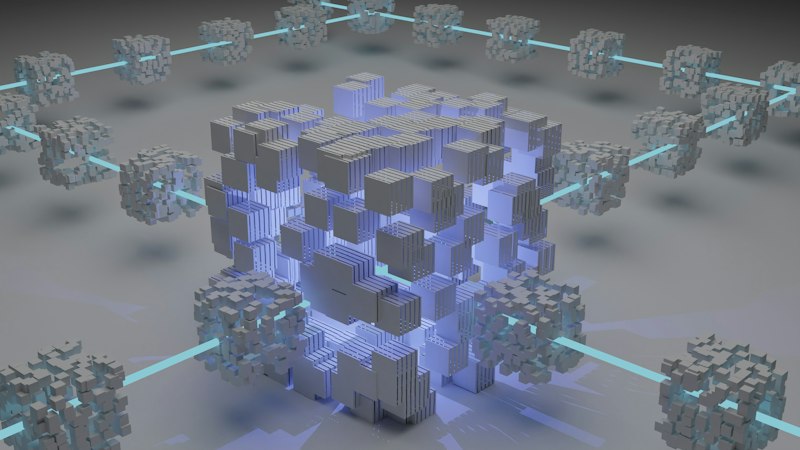
Over the past year, the corporate landscape has seen an explosion of proprietary blockchain infrastructures. Industry leaders like Stripe, Circle, and Robinhood have launched their own digital rails to support stablecoins and institutional trading, resulting in over 110 active corporate blockchains. However, Coinbase CEO Brian Armstrong suggests that this fragmentation is a temporary phase. He anticipates a significant market shakeout where isolated corporate networks will either fail or consolidate into larger, interconnected ecosystems. Coinbase is strategically positioning its Base network to absorb this fragmented liquidity and become the primary hub for institutional DeFi.
Technology context
The current wave of corporate expansion relies heavily on Layer 2 (L2) scaling solutions, primarily built on Ethereum. An L2 functions as a secondary protocol that handles transactions off the main Ethereum chain to increase speed and lower fees, while still relying on Ethereum for ultimate security. The challenge today is "liquidity fragmentation": assets on Stripe’s network cannot easily move to Robinhood’s without complex bridges. Coinbase utilizes the "OP Stack," a modular framework that allows different L2s to become interoperable, forming what is known as a "Superchain" where assets can move seamlessly between networks.
Why it matters
For the broader industry, the current state of fragmented corporate blockchains creates friction and limits the network effect of decentralized finance. If every major corporation operates within a "walled garden," the core promise of blockchain—universal access and efficiency—is undermined. A consolidation toward a few dominant, interoperable standards like Base could revolutionize global value transfer, making it as seamless as sending an email. This shift represents the transition from experimental silos to a unified global financial infrastructure.
Key terms explained
- Layer 2 (L2): A secondary framework or protocol built on top of an existing blockchain to improve its speed and efficiency.
- Interoperability: The ability of different blockchain networks to exchange information and value seamlessly.
- Liquidity Fragmentation: The scattering of capital across many different platforms, making it harder and more expensive to trade large volumes.
- OP Stack: An open-source development stack maintained by the Optimism Collective that powers the Superchain ecosystem.
Impact
In the short term, we will see intense competition as corporate entities vie for developer attention and user deposits. Many niche corporate chains may face obsolescence if they fail to reach critical mass. In the medium term, this will lead to a better user experience (UX), where the underlying blockchain becomes invisible to the end-user, and assets move freely across different corporate-backed L2s within a unified ecosystem.
What's next
Expect a wave of migrations where corporate entities move away from isolated private chains toward public, interoperable L2 solutions. Coinbase is likely to expand the utility of Base by integrating more traditional banking features, effectively turning it into a universal settlement layer. The future points toward a "Superchain" model where major financial players share a common infrastructure while maintaining their own branded interfaces and services.
*
Educational analysis generated with AI and editorially reviewed.
Sources
- CryptoSlate
- Coinbase Investor Relations
- Optimism Foundation Documentation